Therapy for Ravers: Finding a Therapist Who Understands Festival Culture
A primer on the intersection of mental healthcare and the live music, EDM, and festival communities
16 minute read
You will never forget the moment it clicked for you. Surrounded by friends and people who suddenly don’t feel like strangers, you feel the beat of the music intermingling with your heartbeat. Your body is dancing without you directing each movement. You are completely embodied while simultaneously feeling like you have transcended your body. Memories, insights, or new ideas may be appearing in your thoughts. Or, your mind may be blank for once. You could be overwhelmed with raw emotion; joy, love, ecstasy, freedom, and awe are common. It feels like the moment could last forever, despite having awareness of how impermeant moments like this can be.
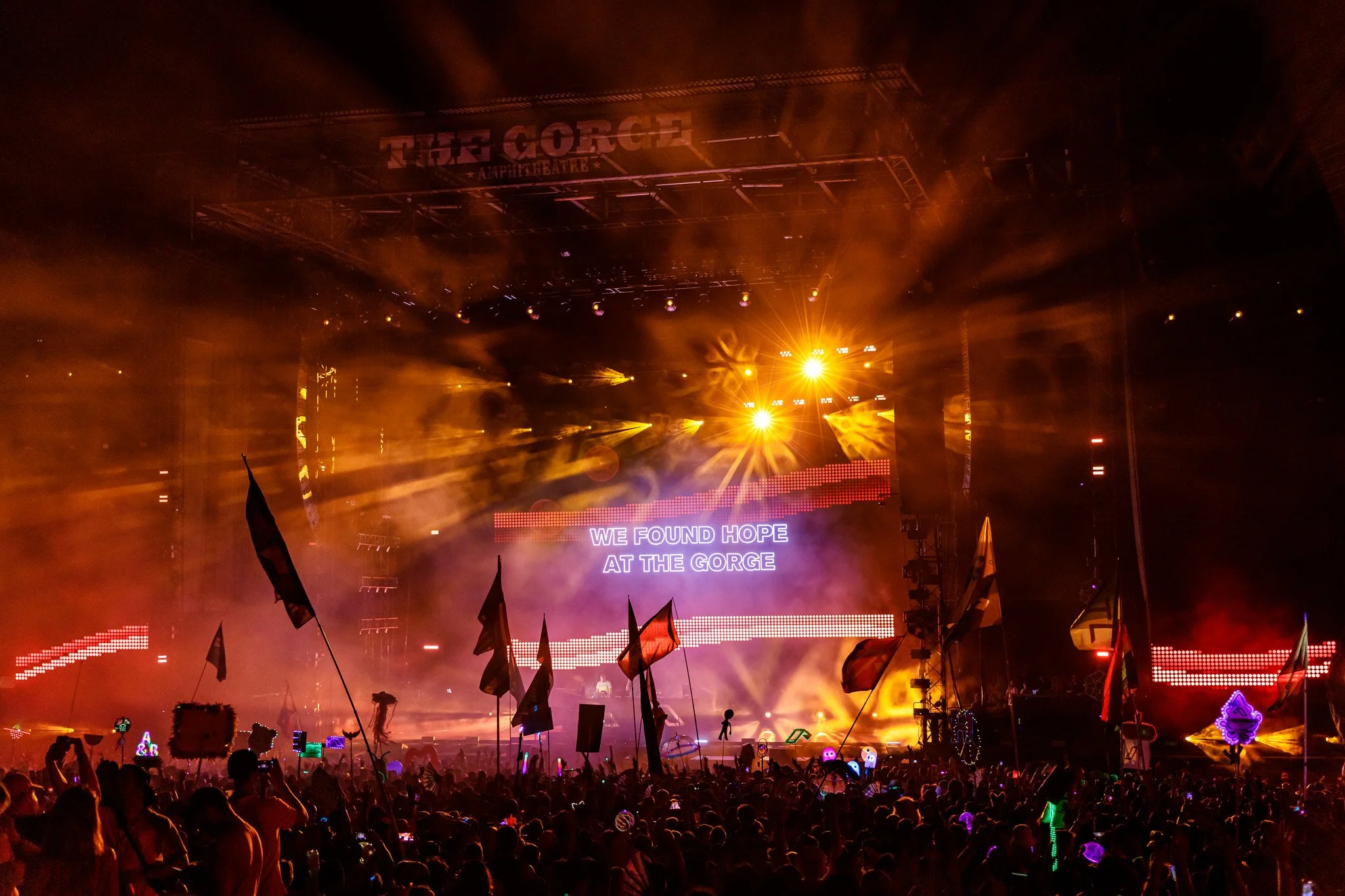
Photo credit from Above & Beyond’s Group Therapy Weekender 2022
I could be easily describing a religious experience. If you are a member of the community, you know that I am writing about how it feels to attend raves, electronic music concerts, or even some live band shows. Everyone remembers their first show when the therapeutic value of the experience really landed. You immediately realized that you need to seek out more of these experiences, since you feel like a better person after it’s over.
French sociologist Émile Durkheim coined such experiences as collective effervescence - an intense, energizing, communal experience when we transcend feeling like individuals and instead feel like part of a unified whole. We know subjectively how valuable these experiences can be for our mental health. Academic researchers have also told us how collective effervescence is associated with self-transcendent emotions, collective positive emotions, group identity, and individual wellbeing (Pizarro et al, 2022).
People in the live music, EDM, and festival communities experience acute and long term improvements in mental health as a result of attending shows. We already understand the importance of taking care of our mental health! However, most of us will still benefit from professional mental healthcare at some point in our lives. You may be experiencing symptoms that are beyond what you can manage by yourself or with the support of friends. You may be having difficulty integrating your peak and challenging experiences into actionable lessons. Or, you may be experiencing a significant life event or transition that feels stressful and overwhelming. Ravers may also struggle to maintain positive habits and eliminate unhelpful habits. Professional therapy is designed to help with all of these issues.
If attending shows is a major part of your life, you may be lost trying to find the right therapist. You want to find someone who “gets it” without having to explain why attending shows is so important to you, but realize that “raver” likely won’t appear in a therapist’s bio. You may be afraid of judgement from professionals who might see ravers as partiers and drug users. Ultimately, you want to find a therapist who you can really trust, since being vulnerable and open in therapy is crucial for the healing process. In the rest of this article, I will lead you through a deeper dive of why your therapist should understand rave and festival culture, the mental health challenges that are unique to people in the rave and festival scene, why many ravers seek out therapy, what therapy can be like for ravers, and what to look for when finding a therapist.
Why It Matters That Your Therapist Understands Festival Culture and EDM Culture
Festivals and Shows Can Be Deeply Meaningful Experiences
Attending festivals and shows can result in a wide variety of positive emotions. This is what keeps people invested in the scene, and what keeps them spending money on tickets and travel to events! Taking any kind of break from the “default world” can be restorative, but the magic environment of festivals and shows takes things to the next level. Gift culture, PLUR values, walkable mini-cities, being surrounded by friends & friendly strangers, and radical self-expression are all different facets of the culture that end up being incredibly wholesome and meaningful. A show or festival with the right structure and supports is a safe container to fully express yourself, experience shifts in your personal identity, process emotions, and experience real belonging. It is nearly impossible to boil this experience down to words - you really have to experience it for yourself. When I go to a well-curated show, the depth of emotions that I feel leaves a lasting impression on me. Some of the most meaningful and fun experiences of my life have occurred at festivals and concerts.
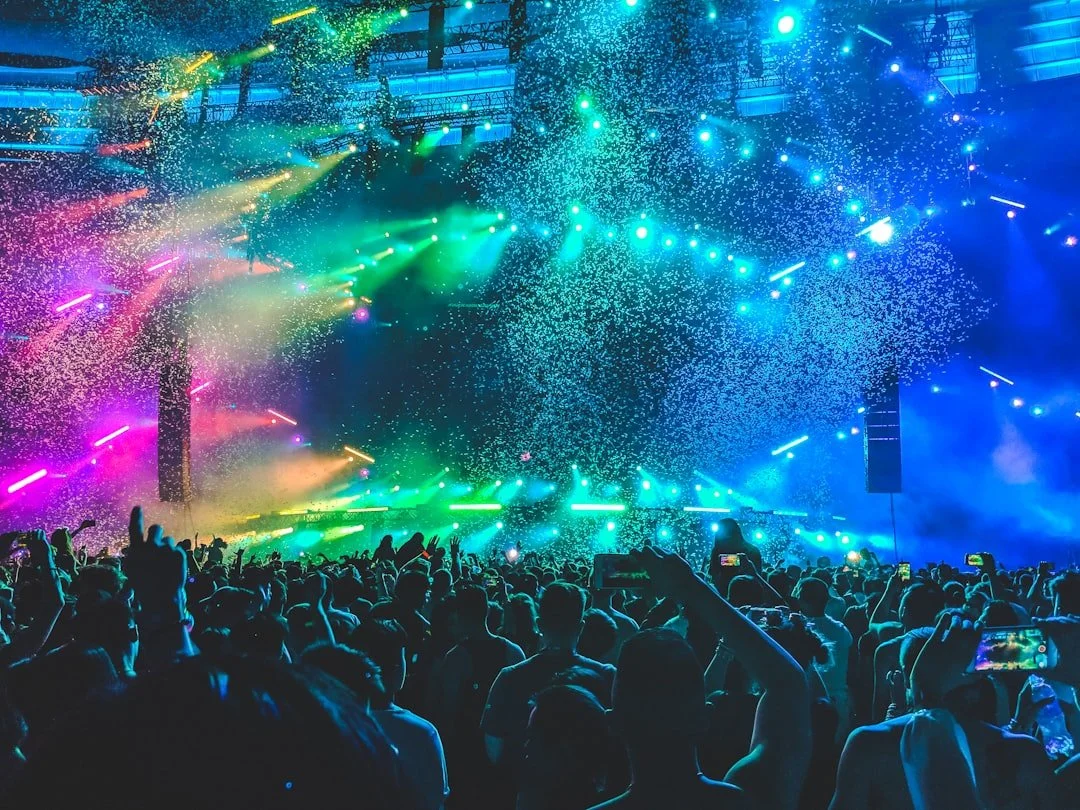
Photo by Aditya Chinchure on Unsplash
The Gap Between Festivals and Everyday Life
Shows and festivals readily provide conditions for peak experiences, defined as profound moments of euphoria and deep connection. In everyday life, peak experiences can be quite rare! This may result in feeling deeply connected at events but disconnected in normal life. Post festival depression may be normalized in your circle of friends. You may struggle to return to work after having a transformative experience at a show. Family and some friends may misunderstand what you are going through, and they may be unable to offer meaningful support. You may have finally discovered answers to issues in your life at a show, and the next steps to take were clear in your mind. But after the show, turning those insights into real changes is a roadblock you can never seem to get past. This is why therapy for ravers is so critical.
Mental Health Challenges That Can Be Hidden Inside Festival Culture
Despite the number of positive emotions and meaningful experiences ravers have, there can be a shadow side to participating in rave culture or festival culture. Understanding these challenges is the first step in healing and growing from them.
Using Shows to Escape Rather Than Heal
Many of us already have awareness and clarity about our problems. We can sense how we get in our own way and limit our potential. However, the first reaction to a problem, stressor, or unpleasant reality is often avoidance. Avoidance provides short term gratification by temporarily masking the issue. We may feel much better in the moment when we ignore challenging emotions or issues. Unfortunately, this results in the feelings coming back later, stronger than ever.
Escapism is the classic avoidance tactic that comes naturally to us. By paying attention to distractions, we can regulate how we are feeling in the moment. Certain levels of escapism can be healthy, but excessive escapism can lead to worse mental health outcomes. Some common escapism strategies include media consumption, scrolling, video games, reading fiction, creating art, substance use, engaging in physical activity, and being a workaholic. Festivals and shows can also be used for escapism. When used for this purpose excessively, our natural healing capabilities can be blocked. We may be feeling stuck instead of liberated.
Burnout
Attending festivals and shows can be quite taxing on the body. The lack of sleep, diminished nutrition, substance use, and increased physical activity can all create physiological stress. The allure of festivals and shows is potent, and keeps us coming back for more. But when we attend many festivals or shows in short period of time, we can start to feel the effects of all the stress as burnout. The three dimensions of burnout according to the World Health Organization are feeling exhausted, feeling negative or cynical, and a reduced sense of efficacy in life (World Health Organization, 2019). While constantly chasing the next event may be fun for a while, it is normal to experience burnout if the demands on your body regularly exceed your amount of inner resources and self care.
Loneliness
The social nature of shows can ironically emphasize feelings of loneliness. For those with a shy or introverted personality, attending raves and festivals can create subtle feelings of shame around the quality and quantity of your friendships. You may feel loneliness after a big event because the amount of meaningful social connections decreased after returning home. Or, you may find it easy to connect with people at a show, but struggle to maintain friendships in everyday life. If you have ever struggled with loneliness, you know how debilitating it can feel. Prolonged loneliness can have serious biological consequences, including accelerated physiological aging, increased blood pressure, cardiovascular health risk, and all-cause mortality (Hawkley & Cacioppo, 2010). It’s important to seek mental healthcare if you are struggling with loneliness.
Identity Questions
Transcendent experiences often cause us to question our identity and purpose in the world. Many people who attend shows and festivals use recreational psychedelics to enhance their experiences, which can lead to both deeply meaningful and uniquely challenging consequences. Whether you experienced “ego death” or just a profound reconsideration of your values, livelihood, or close relationships, you may be facing a challenging psychological landscape when you return to everyday life. Questioning your identity and purpose may feel destabilizing, but you can also consider it an opportunity to make significant changes that will improve your life in the long run.
Photo by Noah Buscher on Unsplash
Common Reasons Ravers Seek Therapy
Anxiety and Stress
Generalized anxiety
Social anxiety
Performance anxiety
Overthinking
Burnout
Feeling “wired but tired”
Nervous system issues
Low energy
Feeling stuck
Life Transitions
Career uncertainty or job changes
Graduating from school
Relationship changes
Relocating
Identity shifts and exploration
Health changes or a new diagnosis
Addiction recovery and sobriety
Spiritual awakening
Grief and loss
Post-Festival Depression
Mood changes that affect daily functioning
Loneliness
Neurochemical recovery
Finding purpose
Returning to daily responsibilities
Psychedelic Integration
Processing psychedelic experiences
Integrating difficult experiences
Turning insights into meaningful change
Cannabis and Other Substance Relationships
Create intentional relationships with substances known to have healing properties
Using cannabis and other substances for personal growth instead of escapism
Harm reduction
Explore healthy vs unhealthy substance use
Relationship concerns
Intentional dating
Concerns within polyamorous and ethically non-monogamous (ENM) relationships
Exploring boundaries and expectations
Codependency
Attachment issues
Contact a raver-friendly therapist now
What Therapy Looks Like for Someone in the EDM Community and Festival Community
A Space Where You Don’t Have to Explain Everything
When you find a therapist that understands festival culture, you don’t need to waste time setting the scene before diving into the details of an issue. Not only will a therapist in the community understand your experiences at shows, they will also have a unique perspective on how to leverage your participation in EDM or festival culture as part of your treatment plan. I know firsthand how truly healing the culture can be, with ample opportunities to build community and belonging, to use music and dance as tools for healing, and to make the most of transformational experiences as the building blocks for lasting change.
Therapy That Goes Beyond Symptom Reduction
Therapy has the opportunity to be a depth-oriented healing process instead of a treatment plan to address surface-level symptoms when you find a therapist that you can trust and connect with easily. True healing and lasting change occur when deep, existential questions can be addressed, like how will you make best use of your impermanent life, and how your behavior can be guided by meaningful values. When your full, authentic self can be honored in the therapeutic process, you will experience greater self awareness which may lead to deeper insights and ah-ha moments.
Photo by Shamblen Studios on Unsplash
Integrating Peak Experiences Into Everyday Life
Festivals and shows can be endlessly inspiring. Whether you use psychedelic substances or not, we often leave events having a renewed perspective on life. Maybe that feeling of refreshment lasts for a few days upon returning home, but then you get back to the status quo (which wasn’t serving you in the first place). Therapy can be the solution to integrating your new insights and perspectives into everyday life. Translating festival inspiration into sustainable change can be quite challenging when your responsibilities come piling back on after an event. Therapy gives you dedicated time to talk through what you learned and experienced, and get professional guidance on how to move forward in a renewed direction.
What to Look for in a Therapist as a Raver
Cultural Competence Matters
An ideal therapist likely hasn’t attended all the same shows as you. But, they should understand electronic music culture, harm reduction, psychedelic integration, cannabis use, and the impact of spiritually transcendent experiences.
Questions You Can Ask During a Consultation
Examples:
Have you worked with people involved in the EDM scene?
Are you comfortable discussing psychedelics?
How do you approach cannabis use?
What is your perspective on harm reduction?
How do you help clients integrate transformative experiences?
Contact a raver-friendly therapist now
Therapy Is About Bringing Festival Values Into Everyday Life
Whenever I go to a festival, I relish in the fact that I can be my truest self there. Shows provide a special opportunity to experience freedom: freedom to fully express myself, dance as much as I want, and connect with new and old friends. When its time to go home from an event, I often find myself wishing that I can make the “default world” more like a festival. The good news is that we really can do this - we can give ourselves permission! And if more of us strive to make the default world more like a festival, we can make everyday life a more fun place to be. Therapy can function as that extra layer of support to keep us accountable to these goals, and help us address whatever barriers arise. With therapy, we have an opportunity to turn aspects of festival culture into lasting, everyday benefits. Here are some examples of how we bring festival culture into everyday life, whether you are in therapy or not:
Fashion: Are there ways you can pay more attention to how you dress yourself in everyday life? Are there more patterns and colors you can wear? How creative can you be in coming up with everyday outfits that mirror the radical expression at a festival?
Friendliness: Festivals provide endless opportunities for micro-interactions. How can we be more present in everyday life to notice opportunities for micro-interactions? When was the last time you complimented a stranger outside of a show?
Creativity: We easily unleash our creativity at festivals. Are you making space for creativity in your everyday life? Do you have a practice of dancing outside of events?
Presence: At events, most of us are effortlessly present. With less need to use phones and technology, we become more tuned into our senses. The loud music helps us tune into our bodies as well! Living in the present moment is the solution for coping with so many of life’s challenges. Do you have a regular mindfulness or meditation practice to bring more presence into your everyday life?
Frequently Asked Questions
Can I go to therapy if I use psychedelics?
Absolutely. I recommend mental healthcare in conjunction with any amount of psychedelic use so you can openly process your experiences and discuss harm reduction. Look for therapists who specialize in psychedelic integration.
Can I go to therapy if I regularly use cannabis?
Despite recreational cannabis being legal in Washington State since 2012, and being legal in many other states across the USA, there can still be an odd stigma around using cannabis in everyday life. It might be challenging to find a therapist who sees cannabis as a powerful plant medicine when used in healthy ways. But such therapists do exist! Depending on your goals surrounding cannabis use, you can either look for a therapist who specializes in addiction or substance dependency (if your goal is to reduce your use), or you can look for a therapist who specializes in cannabis coaching or psychedelic integration (if your goal is to use the plant in a more medicinal way). Cannabis may simply be a part of your life that you don’t want to explain much. I suggest asking about the therapist’s perspective on cannabis use during a consultation call to gauge whether you feel comfortable working with them.
Do therapists judge people who attend raves?
It would be unprofessional for a therapist to pass judgement about attending raves and shows. However, just like any professional service, there is the chance of encountering someone who isn’t practicing ethically. If you feel judged or uncomfortable sharing your experiences, you may consider broaching this with your current therapist to give them an opportunity to course correct. If your concerns remain unresolved, you may consider looking for a different therapist. It is surprisingly common to terminate care with a therapist to seek care from a different therapist, and you can do this for any reason. I do suggest having a conversation with your current therapist first to address any possible misunderstandings. You can directly ask a potential therapist whether they work with people who attend raves and festivals to help you decide whether or not you want to work with them.
Can therapy help with post-festival depression?
Therapy can help you cope with the symptoms of post festival depression, and help you understand the root cause of why you get depressed in the first place. Understanding the root cause, and taking action aligned with your values, is a way to have a lasting impact in how you relate to challenging emotional experiences. Human beings normally experience a range of positive and negative emotions. Healing is often found in embracing these ups and downs, instead of trying to eliminate all negative feelings. It is normal to feel down after a festival! But if your symptoms are getting in the way of daily functioning, therapy can help you manage your emotions so that your lows aren’t so debilitating.
Is therapy useful if I don’t think I have a mental illness?
Therapy can be supportive for people who do have a mental illness, or for people who do not have a mental illness. Just like you would go to a doctor to treat an illness like the flu, acute problems like minor injuries, or for preventative treatment, you can also see a therapist to treat mental illness, to support you through a temporary life transition, or to take a preventative stance on various issues. If you are planning to pay for therapy through insurance, be aware that your therapist will have to assign you a diagnosis. You can view this diagnosis as a guide to forming an effective treatment plan instead of a permanent fixture indicating mental illness. Self improvement and personal growth can be accessed by anyone through a therapeutic relationship, whether your problems feel big or minor.
Can therapy help me integrate meaningful festival experiences?
Yes! If you come home from festivals and shows feeling lost or confused after a peak or challenging experience, you may benefit from therapeutic integration support. Festivals can often be turning points in our lives, but only if we can translate the meaningful experience into lasting change. Processing out loud with a therapist is one of the best ways to integrate your experiences into a meaningful narrative that supports your personal growth.
Final Thoughts
You shouldn’t have to hide an important part of your life in therapy! The therapeutic relationship will feel easier if you share a community or identity with your therapist. Ultimately, the strongest therapeutic relationship is one where you feel understood, and where you feel that you can fully express yourself to a trusting professional.
There are so many strengths that can be leveraged for people that are involved in the EDM and festival communities. Festival culture can be a source of healing, growth, creativity, and belonging. Therapy can help carry those experiences into everyday life in a meaningful way while also addressing mental health challenges that are limiting your potential.
If you’re looking for a therapist who understands rave culture, music festivals, psychedelic integration, intentional cannabis use, and the search for deeper meaning, I’d be honored to support your journey. Together we can explore what’s no longer serving you, integrate transformative experiences, and help you build a life that feels as authentic and connected as the moments you experience at a show.
I am licensed in Washington State and provide virtual therapy to people residing across the state. If you do not live in Washington, please still reach out, as I may be able to refer you to a raver-friendly therapist who practices in your state.
May you be well!
Love, Jess
References:
Hawkley LC, Cacioppo JT. (2010 Oct). Loneliness matters: a theoretical and empirical review of consequences and mechanisms. Ann Behav Med. 40(2):218-27. doi: 10.1007/s12160-010-9210-8. PMID: 20652462; PMCID: PMC3874845.
Pizarro JJ, Zumeta LN, Bouchat P, Włodarczyk A, Rimé B, Basabe N, Amutio A, Páez D. (2022, Aug 31). Emotional processes, collective behavior, and social movements: A meta-analytic review of collective effervescence outcomes during collective gatherings and demonstrations. Front Psychol.;13:974683. doi: 10.3389/fpsyg.2022.974683. PMID: 36118463; PMCID: PMC9473704.
World Health Organization. (2019, May 28). Burn-out an “occupational phenomenon”: International Classification of Diseases. https://www.who.int/news/item/28-05-2019-burn-out-an-occupational-phenomenon-international-classification-of-diseases
